


World Cup Flop — 3 Lessons for Your Own Outdoor Movie Night
 What Hi-Fi?'s Tom Parsons has spent almost two decades reviewing TVs, projectors and home cinema kit. Ahead of the World Cup, he decided to recreate the pub-garden experience at home — projector in the garden, BBQ lit, football under the stars — and then wrote up the result with refreshing honesty, calling it “pretty rubbish (but that's my fault).” We enjoyed the piece, because almost every problem he ran into is one we help first-time outdoor-cinema hosts avoid.
1. No projector competes with the sun before sunset.
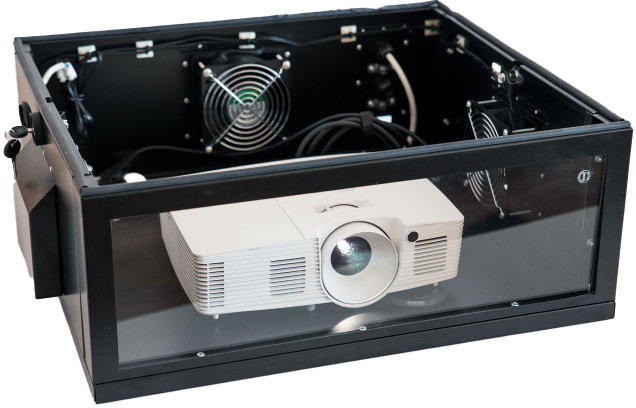
Parsons borrowed an excellent five-star lifestyle projector rated at 1,300 ANSI lumens — plenty for a dark living room. In the garden before sunset, though, it threw light but, in his words, “no discernible image on the screen,” and he had to move it to within inches of the screen before a picture appeared. His takeaway: “A projector that looks bright indoors can look surprisingly dim outside.” **No projector competes with the sun before sunset**
Even flat, overcast daylight washes out a projected image far more than people expect. Contrast is the first casualty — ambient light lifts the dark parts of the picture to grey and detail vanishes. Lifestyle and portable projectors are built for controlled, dark rooms; purpose-built outdoor systems run in a different class entirely (commonly 6,000 lumens and up) precisely so they can hold an image as the sun drops below the horizon. The rule of thumb: wait for genuine darkness.
 2. A proper reflective projection surface, with black backing, is the brightest solution
For a display, Parsons ordered a 150-inch screen online for £36, which turned out to be “little more than a stretchy white sheet with a black border.” The real issue wasn't the size or the creases — it was that the screen had no backing, wasn't a light tested fabric, so “light was passing straight through it.” He cheerfully admits that “buy the cheapest giant screen available and hope for the best” isn't a solution.
A projection surface does two jobs: it reflects your image toward the audience, and it blocks everything behind it. A thin, single-layer sheet fails the second job, so porch lights, street lights and headlights bleed through from behind and wash out the film. A proper outdoor surface uses an opaque blockout backing — we back ours with a removable black curtain behind the projection surface — so stray light from behind never reaches the viewers.
3. Temperatures drop fast after sundown
When night finally fell, Parsons' picture “suddenly looked pretty decent” — he could even slide the projector back for a bigger image. But by then it was “absolutely freezing,” and the family retreated indoors after about ten minutes. As he puts it, the irony of outdoor viewing is that “the picture often improves just as the temperature drops to unpleasantly nippy levels.” Plan on temperature change! Sleeping bags and heavy blankets make it both fun and warm outside. Cuddle up.

Parsons' own verdict “most of the problems were self-inflicted.” He's already plotting “phase two” with a brighter projector and a better screen. His write-up is worth reading in full.
Source: “Adventures in AV: I tried to set up a projector in my garden for the World Cup, and it was pretty rubbish (but that's my fault)” by Tom Parsons, What Hi-Fi? Quotations are the author's; full credit to Tom Parsons and What Hi-Fi?.